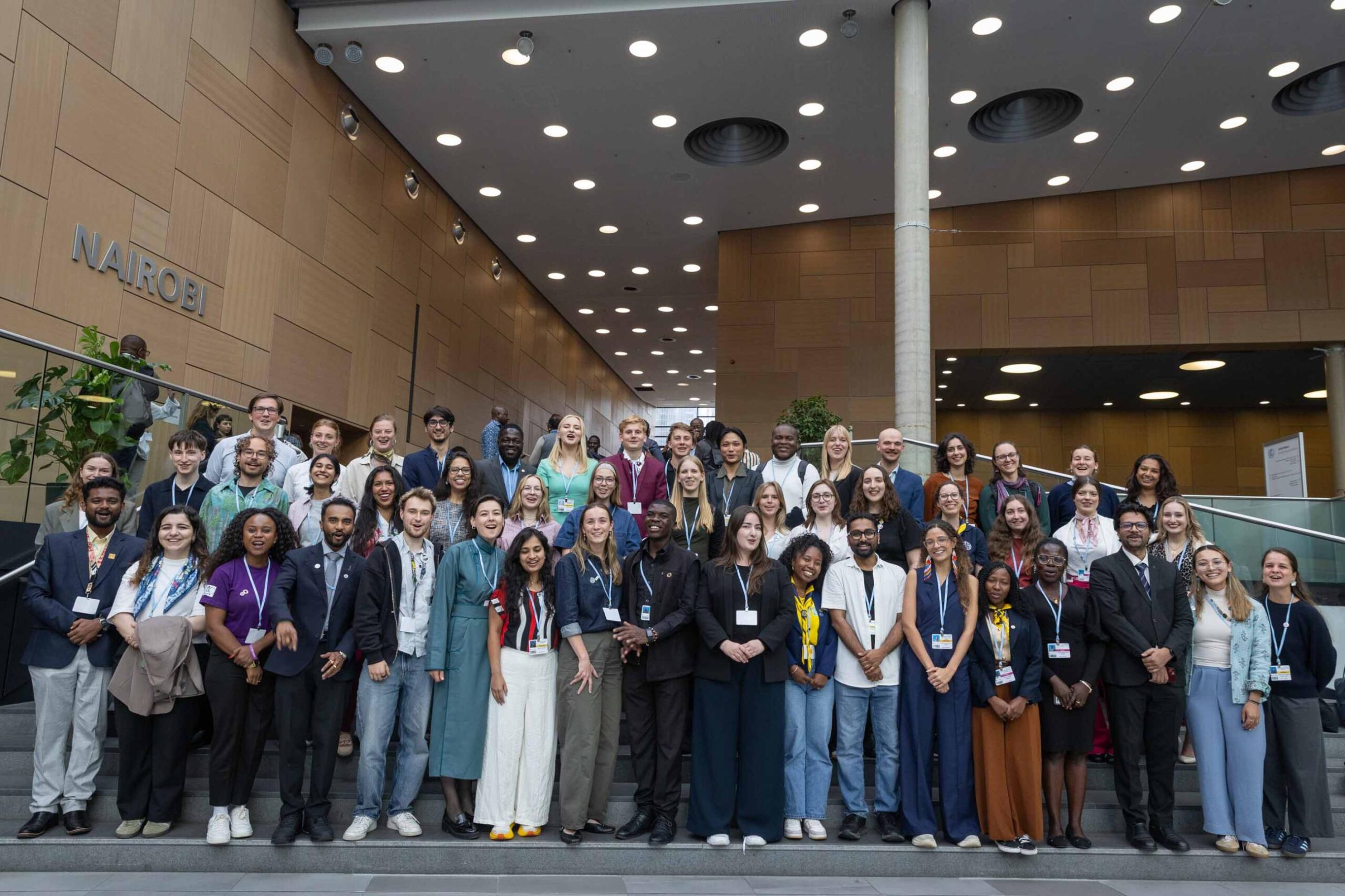
The 2026 United Nations June Climate Meetings concluded in Bonn, Germany, with incremental progress on issues affecting young people, but without the level of agreement needed to respond to the accelerating climate emergency.
Held from 8 to 18 June, the meetings brought together more than 9,000 government representatives, observers, experts, and civil society actors for the 64th sessions of the UN Framework Convention on Climate Change’s subsidiary bodies, commonly known as SB64. The annual Bonn meetings undertake technical negotiations and prepare decisions for adoption at the Conference of the Parties.
For young people, particularly those living in climate-vulnerable African countries, the outcomes were mixed. Negotiators advanced work on climate education, public participation, and just transition. However, they did not reach a substantive agreement on adaptation finance or accelerating emissions reductions. These unresolved issues will now require political attention at COP31 in Antalya, Türkiye, in November 2026.
A stronger framework for climate education and participation
The clearest youth-related opening came through negotiations on Action for Climate Empowerment, or ACE.
ACE is the part of the international climate framework concerned with climate education, public awareness, training, access to information, public participation, and international cooperation. These areas are essential to enabling young people to understand climate policy, participate meaningfully in decision-making, and develop the capabilities required to lead climate action.
In Bonn, governments initiated a midterm review of the Glasgow Work Programme on Action for Climate Empowerment. A dedicated dialogue and technical workshop also explored possible elements of a new ACE action plan.
Draft proposals under consideration include stronger regional and local networks, greater participation by young people and children, more inclusive and intergenerational approaches to national climate policy, and additional support for climate education and teacher training. However, these proposals remain negotiating options rather than agreed commitments.
The formal ACE conclusions postpone final decisions until COP31. Governments, observer organisations and other stakeholders have been invited to submit proposals by 1 October 2026 on how the new action plan should be strengthened. This creates an immediate opportunity for youth organisations and national youth constituencies to place African priorities before negotiators. Read the official ACE conclusions.
Progress towards a just transition mechanism
Bonn also advanced discussions on the Just Transition Work Programme and the new Just Transition Mechanism agreed at COP30.
A just transition seeks to ensure that the shift towards low-carbon and climate-resilient economies creates decent work, protects affected workers and communities, reduces inequality and leaves no one behind. For Africa’s rapidly growing youth population, this agenda has direct implications for employment, professional skills, entrepreneurship, social protection, and access to emerging green sectors.
Negotiators agreed on the terms of reference for reviewing the existing Just Transition Work Programme and began discussing how the new mechanism should operate. However, they did not settle on its institutional form, financing arrangements, or specific functions. These issues will return for negotiation at COP31.
The African Group described progress as “patchy” and expressed concern about the limited movement towards an operational mechanism. The question for African youth is therefore not simply whether a mechanism is established, but whether it eventually directs finance, technology, skills development and employment opportunities towards the people and communities expected to navigate the transition.
Adaptation finance remains the critical gap
The most consequential disappointment for African countries was the failure to reach agreement on the Global Goal on Adaptation.
Developing countries, led in part by the African Group, called for predictable and accessible finance to help countries implement adaptation measures. They also sought explicit recognition of the commitment made at COP30 to at least triple adaptation finance for developing countries by 2035.
Negotiators remained divided over how finance should be addressed and were unable to agree on a substantive outcome. Discussions will therefore continue at COP31. The IISD Earth Negotiations Bulletin summary records the African Group’s concern that insufficient progress on adaptation finance would delay action in countries already experiencing escalating climate impacts.
For African youth, adaptation finance is not an abstract negotiating issue. It determines whether communities can build climate-resilient food systems, protect livelihoods, prepare for extreme heat, respond to floods and droughts, and support young people whose education, health, employment and security are increasingly disrupted by climate change.
Unless finance reaches national and local implementation, adaptation commitments will produce few tangible improvements in the lives of young people.
Youth participation is still not sufficiently protected
The meetings also exposed continuing weaknesses in meaningful and inclusive participation.
In the closing plenary, youth representatives expressed alarm about the limited references to children across negotiating texts. They also criticised the failure to give the Disability Caucus speaking rights and called on the COP31 Presidency to facilitate further discussions on observer participation.
These concerns demonstrate that physical presence at a climate conference is not the same as influence. Meaningful participation requires young people – including young women, persons with disabilities and those from frontline communities – to have access to negotiating information, opportunities to speak, representation in formal processes and the resources needed to participate consistently.
Mitigation remains unfinished business
Negotiators also failed to secure substantive progress under the Mitigation Work Programme, which is intended to help accelerate emissions reductions during this critical decade.
The failure to advance both adaptation and mitigation places young people in a particularly difficult position. Insufficient mitigation increases the severity of future climate impacts, while inadequate adaptation finance leaves communities less able to manage the consequences already being experienced.
In his closing statement, UN Climate Change Executive Secretary Simon Stiell acknowledged that Bonn had made progress on just transition and Action for Climate Empowerment, but had not delivered the necessary outcomes on adaptation and mitigation.
From Bonn to COP31: priorities for African youth
SB64 did not produce a single landmark decision for young people. It did, however, clarify the issues that youth advocates must pursue before and during COP31.
Priorities include:
- securing an ambitious and adequately resourced ACE action plan that strengthens climate education, youth participation, and national implementation;
- ensuring that young people have formal roles in the design and governance of the Just Transition Mechanism;
- translating just transition commitments into skills, decent work, entrepreneurship, and social protection opportunities;
- securing predictable, grant-based and accessible adaptation finance, including pathways for youth-led and community-based organisations;
- protecting the participation of children, young people, and persons with disabilities throughout the UN climate process; and
- demanding stronger mitigation action capable of keeping the 1.5°C goal within reach.
For the Africa Youth Partnership and youth climate advocates across the continent, the road to COP31 must now focus on converting these negotiating openings into concrete commitments. Young Africans need more than recognition as stakeholders. They need the knowledge, institutional access, financing and decision-making power required to shape – and benefit from – a just and climate-resilient future.